Professional
Intellectual Property Research: Examples
Tasked with creating spare parts for competitors' products, a brand new business unit of a major Aerospace Company needed a Patents Engineer/Liaison and hired me for the Company's premier position. Over the next seven years I performed a wide variety of tasks, including patents mining, research, analysis and landscaping, Patentability & Freedom-to-Operate studies, competitive monitoring, and the occasional "G-Job". As many of these tasks were being performed for the first time by this firm, my responsibilities expanded to include writing procedures, providing training, and hiring colleagues. Here's a sample of the many tasks (and presentations) I worked on during this time.
-
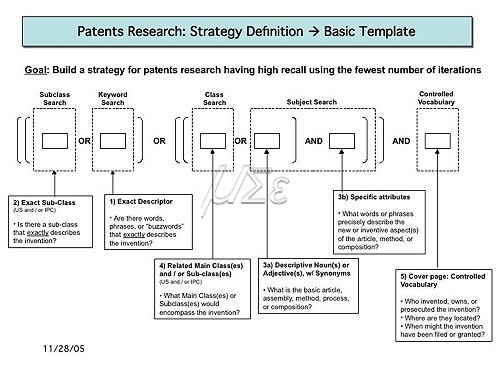
 Search Strategy Creation ProcessCreated for a training presentation given to outside counsels, it formally documented the process I've used since 1998.
 -
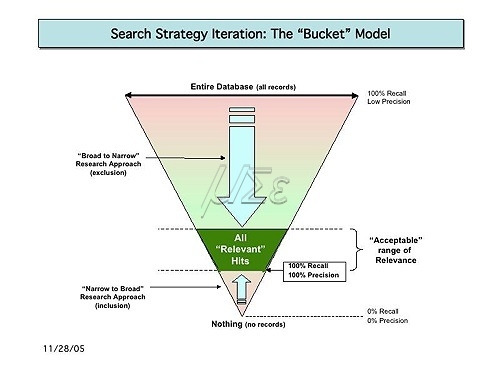
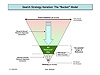 Training Slide: ExampleDespite my repeated and patient explanations, one of my co-workers could not understand what I meant by assembling a "diligent bucket of search results": Creating this chart cleared it right up.
 -
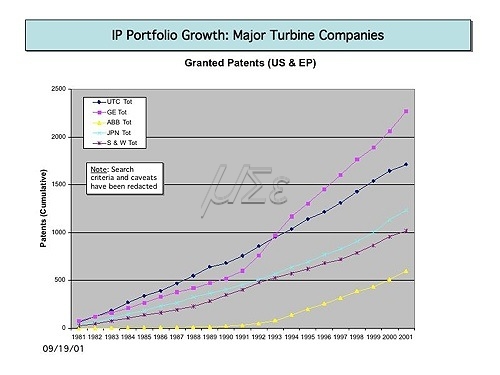
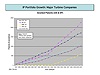 Patent Portfolio Growth ComparisonThis 2001 chart impressed upon an entire corporation the importance of patents as a competitive product. Once nicknamed after me, it's still used as a basic metric today.
 -
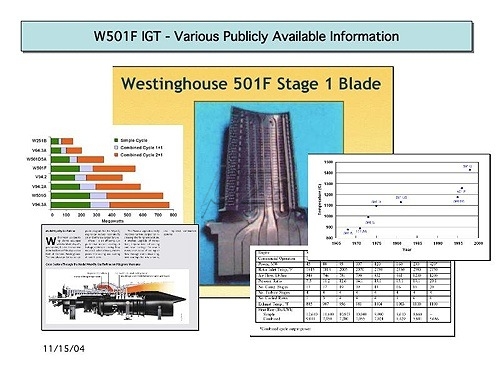
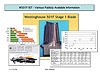 Internet Data Mining ExampleDiligent research considers all sources: Here are some items from the internet describing a Westinghouse industrial gas turbine.
 -
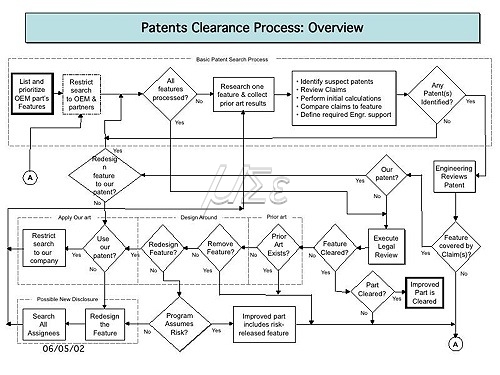
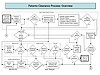 Freedom-to-Operate: ProcessOne of the first top-view charts I created on this process: The final version looked nothing like this and was infinitely more complicated.
 -
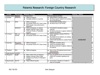 Foreign Country Patents ResearchAn example of work performed to define Freedom-to-Operate outside of the United States. Obviously, the Actions column is redacted.
 -
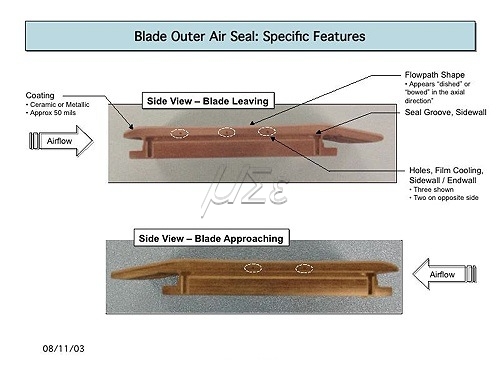
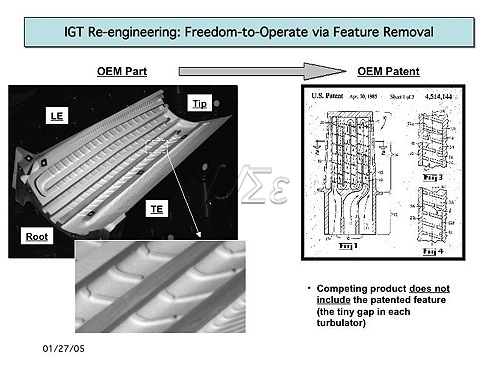
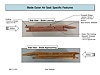 Features Identification Example - IA simple example from of the numerous "part clearance" jobs I performed, it calls out the part's features.
 -
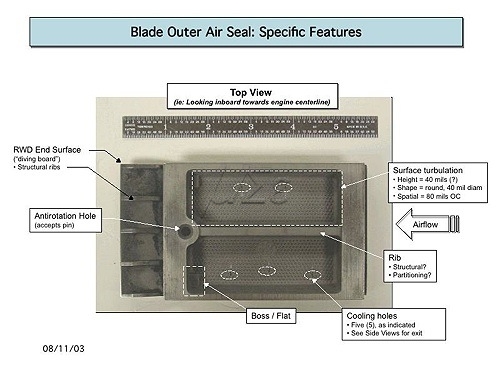
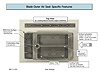 Features Identification Example - IIA simple example from of the many "part clearance" jobs I performed, it calls out the part's features.
 -
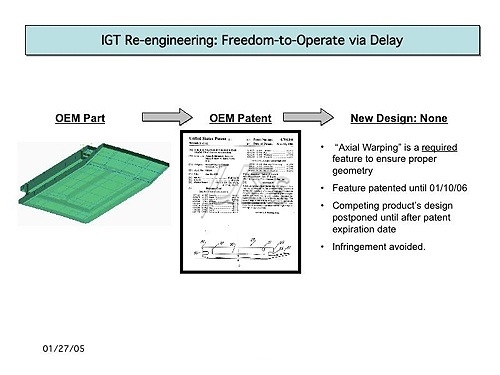
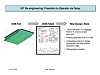 Noninfringement via DelayOn this part, the patented feature could not be worked around or removed: The action was to postpone it's design until the patent expired.
 -
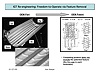 Noninfringement via Feature RemovalFor this part, the patented feature was replaced by a redesigned improvement, allowing freedom-to-operate.
 -
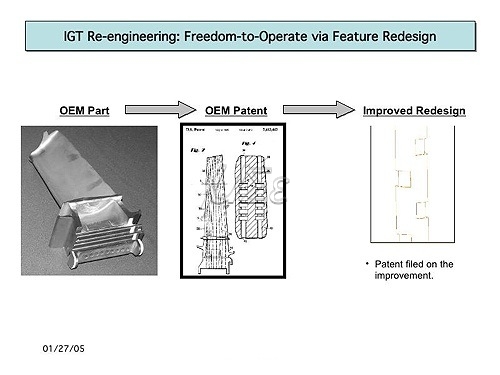
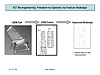 Product ImprovementRedesigning this patented feature provided better performance, longer life, freedom-to-operate, and a new patent: A perfect solution. Teaming with the lawyer and engineer on this task was a pleasure.
 -
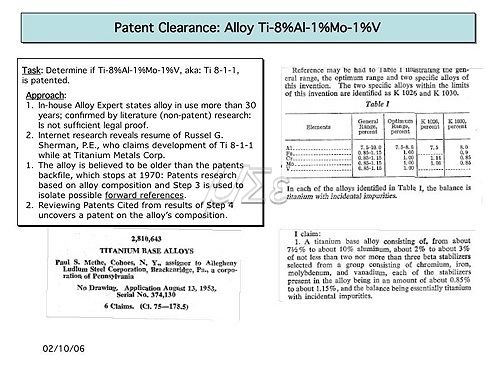
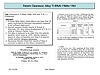 Patent Backfile InvestigationBeing the most experienced IP researcher on the team, I routinely received the tough assignments: Here's an example.
-
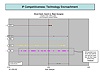 Portfolio Development ExampleFrom a 2002 study on turbomachinery brush seals, this chronology chart illustrates how a major company applied an invention to a variety of situations, earning a new patent each time.
 -
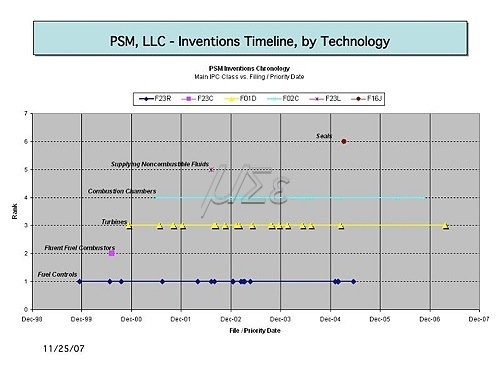
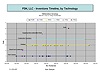 Competitor Monitoring: ChronologicalA competitor's portfolio is plotted chronologically by technology class to illuminate any trends.
 -
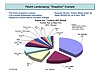 Patent Landscaping ExampleCreated in 2008 as part of a landscape analysis on Blade Outer Air Seals (BOAS), it shows the relative portfolio sizes by major Assignee.
 -
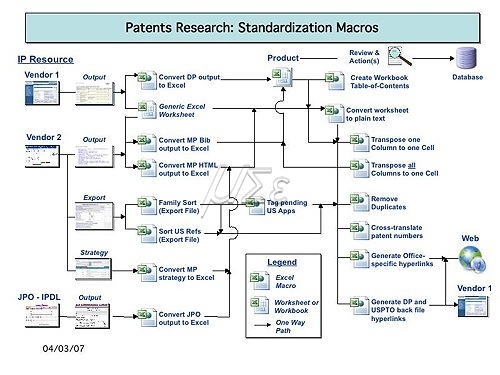
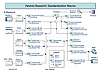 Patents Research WorkflowA summary of the software tools I created to ensure consistent work product regardless of the patent resource utilized.
 -
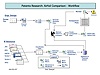 Airfoil Coordinates Comparison: ProcessCreated to streamline freedom-to-operate studies on turbine airfoil blades, it was ultimately used to analyze over twenty-five competitor patents, and possibly as the basis of a patent.
 -
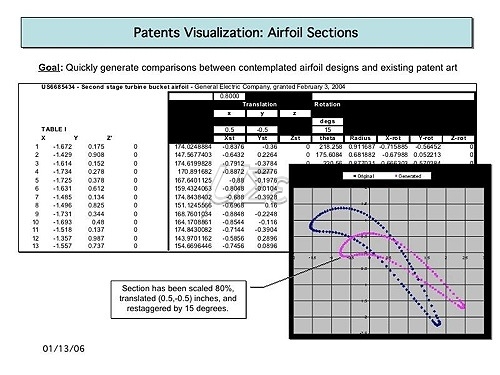
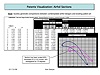 Airfoil Coordinates ComparisonAn example of a Visual Basic macro for Excel created to assist freedom-to-operate studies on turbine airfoil blades. Geometry could be scaled, rotated, or translated using sliders.
 -
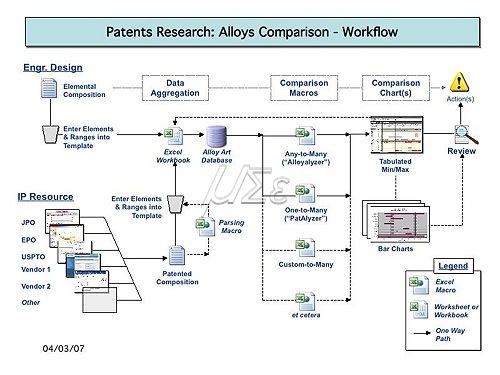
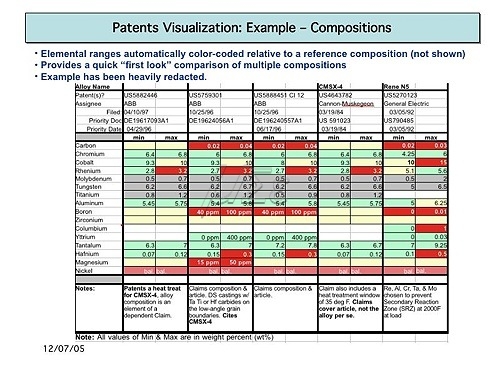
 Alloy Composition Comparison: ProcessCreated to streamline freedom-to-operated studies on compositions of matter, it provided a fairly fast quick look to determine if action by a metallurgist was required. The tool was first used in 2005.
 -
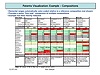 Alloy Composition Comparison: ExampleA heavily-redacted example of a Visual Basic macro for Excel created to streamline freedom-to-operated studies on compositions of matter.
 -
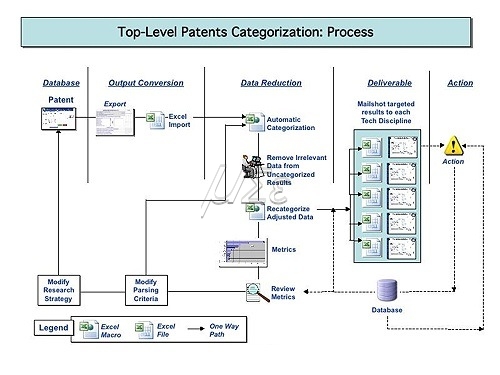
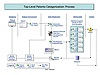 IP Auto-categorization: 1 - ProcessFrom an assignment in late 2008 to define a process to automate classifying new patent publications according to the company's in-house categories.
 -
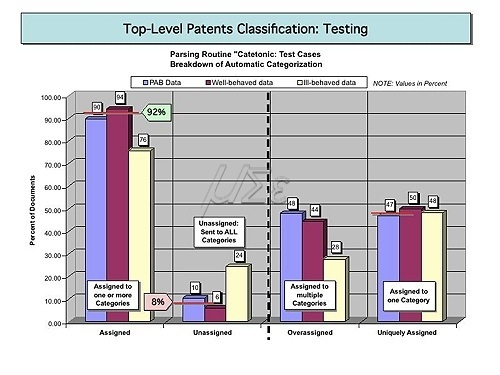
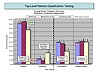 IP Auto-categorization: 2 - EffectivenessThe effectiveness of my proposed, semi-automated procedure for categorizing new patent publications compared very favorably to the existing procedure of manually reading each one. Surprisingly, my procedure did not include any Beysian math.
 -
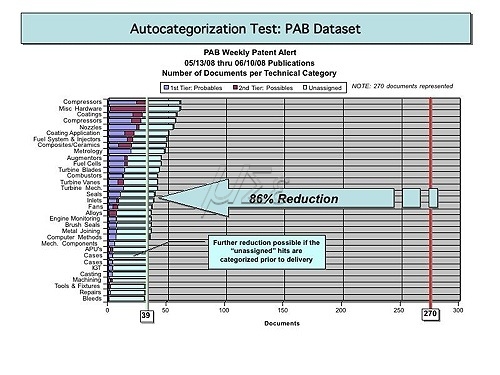
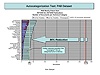 IP Auto-categorization: 3 - SavingsThe existing procedure required each recipient to read every patent and report any relevant patents to their technical lead: The proposed procedure substantially reduced their reading load.
 -
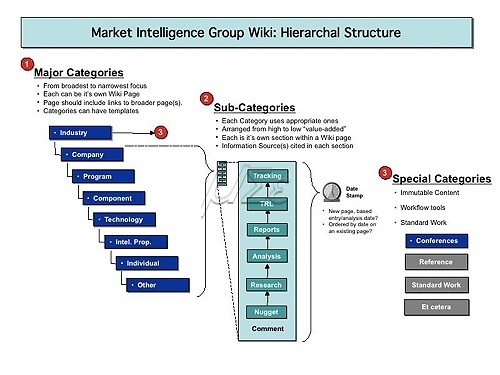
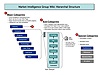 Technology Wiki: HierarchyTasked to define a data structure for the group's new Wiki space, I provided this strawman to the boss.
 -
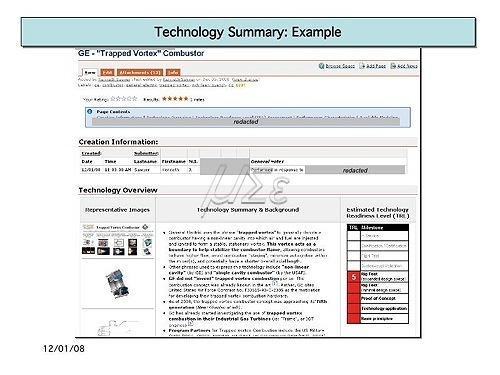
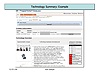 Technology Wiki: Technology SummaryOne of my responsibilities included providing technology summaries to the Engineering Department's emerging Wiki site: Here's an example from the many I authored. click here for the full-sized page.
 -
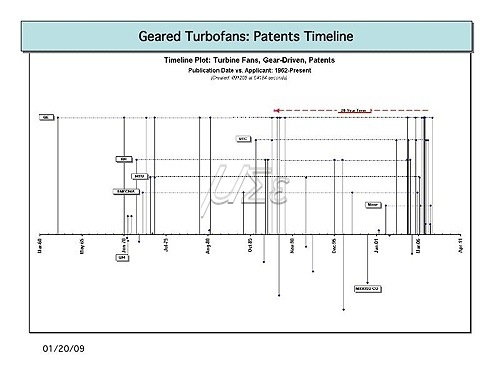
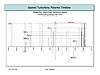 Patents Landscaping: TimelineProvided as a means to chronologically visualize a specific technology area, it was included in some of the technology summaries written for a Wiki site. Created in Excel, with the aid of some Visual Basic programming to make it easier to create others.
 -
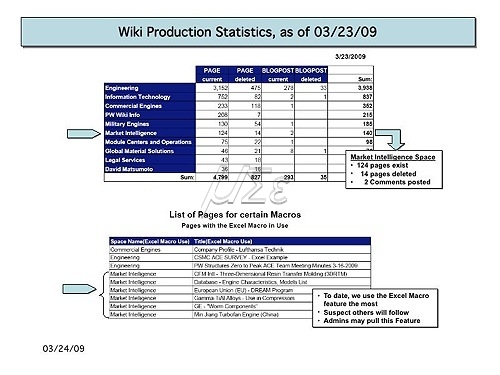
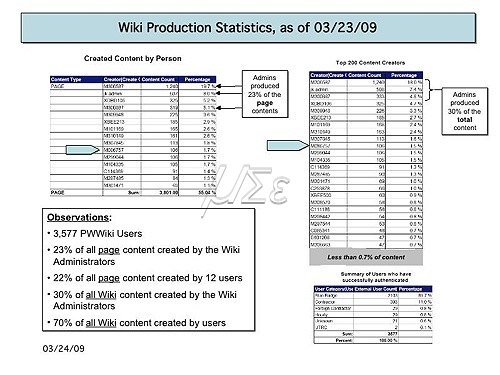
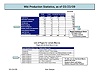 Wiki: Work Product Creation Rate, IThe Boss wanted his Wiki Space to serve as an example for the corporation, so I had to create a lot of content quickly, accurately, and to the needs of the readers: This chart summarizes just how much content I created.
 -
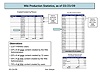 Wiki: Work Product Creation Rate, IIThe Boss wanted his Wiki Space to be the first one operational: This chart shows I was one of the top ten producers other than the Wiki Admins. Later, I found out it needed to be operational before he laid me off.
 -
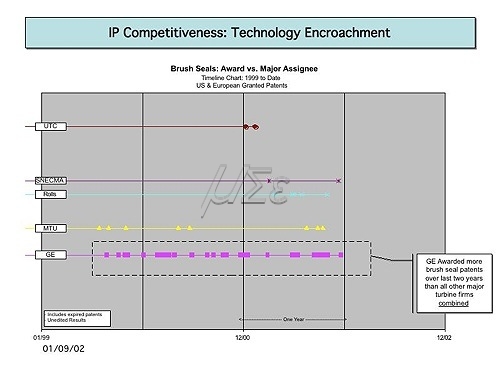
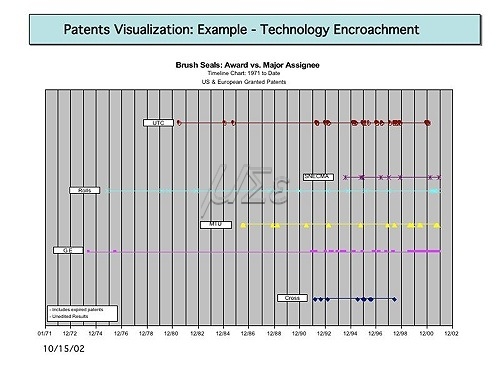
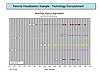 Patents Visualization: EncroachmentSimple chart created to show how a competitor acted quickly to surround a technology with patents.
 -
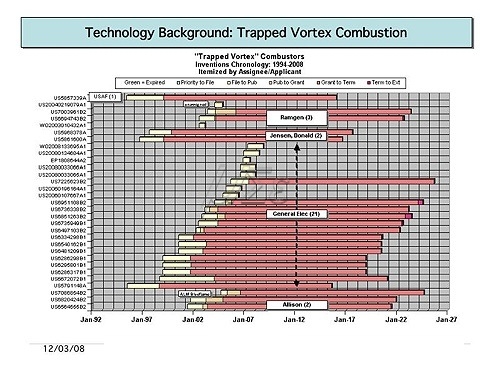
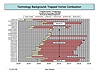 Patents Visualization: TimelineDesigned to visualize the portfolio of "enforceable" patents of a technology, itemized by patent holders.
 -
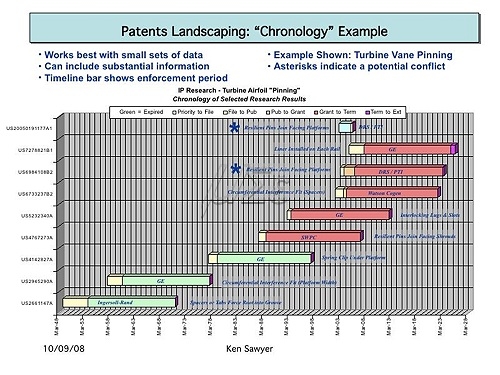
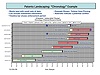 Patents Visualization: ChronologyDesigned to visualize the portfolio of "enforceable" patents of a technology, itemized by patent holders.
 -
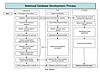 Patents Database: Top Level ExampleIn October 2001 I consulted on the creation of an (ultimately-abandoned) database matching patents to commercial products and methods. When asked again in 2004, I provided this concept.
 -
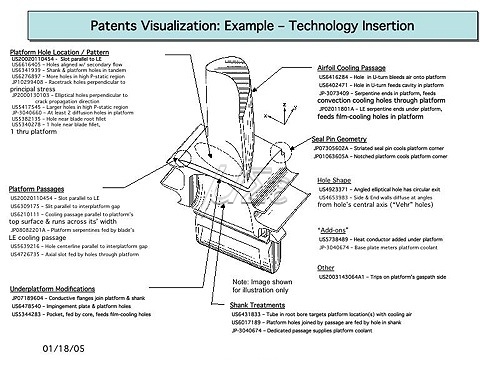
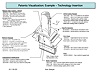 Patents Visualization: Patents, by FeatureThe Boss may not have liked me thinking "outside-of-the-box", but he loved the unedited version of this chart I created as part of a freedom-to-operate study.
 -
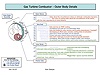 Patents Visualization: Patents, by FeatureConcept page for a database matching patents to a commercially-available article. While it doesn't resemble the database's final design, this slide was taken from an actual freedom-to-operate study I performed on a popular gas turbine combustor.
 -
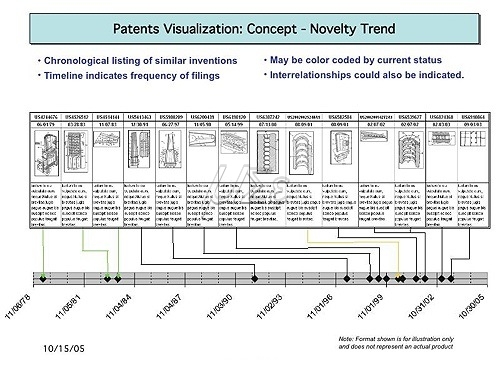
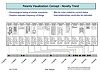 Patents Visualization: Novelty TimelineA strawman I proposed for use within an Engineering Wiki, it proved too time-consuming to produce manually within the production schedule dictated by the Boss.
 -
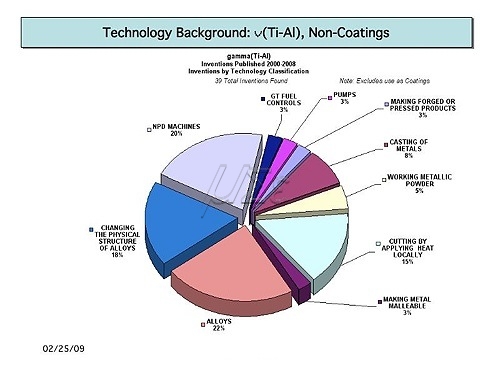
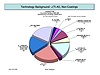 Portfolio Share: ExampleGamma-Ti-Al is typically used in aerospace coating applications: Here's a chart from a study I performed on non-coating uses.